Thursday, November 14, 2013

Fiend Without a Face

As a young man, I sought a university degree in English Literature. I was frustrated by my inability to see deeper meanings in the great books our professors insisted we read. But now, having lived long, these insights come to me unbidden.

Here is an excellent example.

In last night’s horrid dream, a terrifying creature pursued me wherever I went. This creature had no clear form and no face. It appeared everywhere, in a dream that seemed to span a lifetime. 

I am familiar with the theories of C. J. Jung and Joseph Campbell. Obviously, the faceless dream creature represents my ever-present anxiety over so many things – lately, job security issues. Like the faceless creature, these worries are vague and malformed. Wherever I go, they pursue me like a pestilence. There is no escape.

This brings to mind the British science fiction film, Fiend Without a Face (1958; link below), and After the Fox (1966), in which Peter Sellers delivers a memorable line - paraphrased: no matter how fast you run, you can never run away from yourself. 

To relieve the pounding headache brought on by this ever-present tension, I paid $108 for a scalp massage at a fancy spa. But that is another story.

Links:
The Fiend Without A Face (1958) : http://en.wikipedia.org/wiki/Fiend_Without_a_Face
Eyes Without a Face (1960, France): http://en.wikipedia.org/wiki/Eyes_without_a_face

Wednesday, November 06, 2013

The Cheapside Hoard

There's no telling what you'll find when you renovate an old building. You just might discover buried treasure, such as The Cheapside Hoard.
From the Cheapside Hoard: The Stafford Intaglio 

The hoard was uncovered in London in 1912, when a construction worker tearing up a floor with a pickaxe broke through to a stone-lined sub-basement. There he found a wooden box containing "the world’s largest collection of Elizabethan and Jacobean jewels," according to the October 12, 2013 issue of The Economist (link below). 

Why were over 400 pieces of jewelry buried in the basement? The accepted explanation is that this was once the cellar of a  jeweller's shop. In the 1600s, the street was known as Goldsmith's Row.

If you believe the Wikipedia article (link below), the hoard was buried sometime in the period 1640 to 1666. England's Civil War was raging during that period. That suggests the jewels were hidden to protect them from anti-monarchists or civil disturbances. Perhaps nobility left them with the jeweler for safekeeping. But why didn't the owners return to reclaim their jewelry when the war was over? 
Ali Baba by Maxfield Parrish (1909)

There's a potent analogy here, for those who care to see it: that of hidden mysteries. Finding an underground chamber filled with buried treasure is symbolic of self-discovery, as noted in this earlier post on Joseph Campbell: Aladdin's Cave.

The Cheapside Hoard is on display at the Museum of London through April 2014.

Links:

Sunday, October 13, 2013

Pippa Middleton, Helena Asquith... and me

I'd like to meet Pippa Middleton. I think we'd get along famously. But I fear it will never happen. She won't invite me to any of her parties.

I could set my sights a bit lower. A Vanity Fair article a few months back had photos of the Asquith sisters Helena and Gabriela at the exclusive London club Lou Lou's. This photo has captured my imagination.  If I were thirty years younger, and single, and could gain access to Lou Lou's, this particular dream might be within reach. Those who share my fascination can read the Vanity Fair article by following this link. 


Sunday, October 06, 2013

Wild Night Out in New Malden

Ah, the excitement of a Tuesday night out in New Malden. Particularly when it involves a stop at Bar Malden, located directly next to the train station on the High Street.  
Bar Malden, New Malden High Street


Based on the name, I feared the worst. Would it be one of those trendy new places featuring pricey wines, exotic martinis and techno music? Aren't pubs supposed to have names like The White Hart, George and Dragon, The King's Arms, or the Queen's Legs?

Exterior not withstanding (it's on the ground floor of a dreadful 1960s-vintage office tower), Bar Malden proved to be a standard neighborhood pub. The food wasn’t very good, but it wasn’t very expensive either. Nor was the alcohol. And all of it came quickly.

When it was time to go, I faced a dilemma. Does one tip bartenders in English pubs? When I asked the woman behind the bar, she just laughed and replied “Well, it’s nice, innit? But you don’t have to if you order at the bar.” I left her a pound anyway.

For those with long memories, Bar Malden includes the space formerly occupied  by the Chi Chi Chinese restaurant. But that was years ago. 

Sunday, September 15, 2013

Jo Jo Laine, nee Joanne Lapatrie

I recently downloaded a song from 1964 on I Tunes.  It led me down a rabbit hole, or perhaps through the looking glass, searching for a woman who died eight years ago.

Here’s how it happened.

The song that launched this research project was the Moody Blues’ “Go Now.” I’ll never forget Denny Laine’s performance on national TV when “Go Now” was a Top 40 hit. In the middle of the song, he suddenly used one finger to jerk his eyebrow up and down with a quick vibrato-like movement.  It was bizarre and quirky, and I wondered at the time why he did it. I still wonder.
Jo Jo Laine, nee Joanne Lapatrie

I fell to musing on Denny Laine’s brief tenure with the band which went on to such success without him. That led me to research him on Wikipedia. There I learned he’d married someone named Jo Jo Laine. She has her own Wikipedia article. So I clicked on over to it.

Jo Jo, nee Joanne Lapatrie, is variously described as a model, singer and actress. She's also described as a groupie in the 1960s and 1970s. Born in 1952 or 1953, she was of my generation, only a year or two older than I. That was intriguing, so I ventured on, plodding through many web pages on various sites.

I’ve now invested an appalling amount of my precious time researching this woman’s life and likeness. I have gone so far as to purchase The McCartney Files by Bill Harry (Virgin Books Ltd, 1986, 192 pages). It contains information on Jo Jo because of her link with Wings through Denny Laine’s tenure with that band. According to The McCartney Files, Jo Jo sold her memoirs to the British tabloid Sunday People.  They include titles such as “My Galaxy of Pop Star Lovers” and “Lust at First Sight” and were published on April 17, April 18 and May 1, 1983. 

Oddly enough, one of those Sunday People articles was published on the day my daughter was born. As a father, it saddens me to read of Jo Jo losing her virginity to Jimi Hendrix at the tender age of 17, and cavorting with the swinish Jim Morrison when she probably wasn't much older. That’s just a sample of what you’ll find if you read through the links below.

I don’t like to think of her three children reading these things about their mother on the Internet. But by today’s standards, what she and other groupies did in those days isn’t so bad. True, they had one-night stands with musicians. That isn’t much worse than the casual sex and naked photo messaging that seems so widespread among young people today.  My guess is plenty of today’s girls don’t wait until age 17 to lose their virginity. Certainly 1960s groupie behavior pales in comparison to what porn stars do for money. And it seems porn is almost everywhere these days, even on DirectTV.

After all this research, I have to wonder how much of what I’ve read about Jo Jo Laine on the Internet is rumor, exaggeration, or simply made up. The 1983 Sunday People articles are probably the source for much of what one finds about her online. If I could only get my hands on those articles... At the rate I’m going, no doubt I’ll do that soon. 

Of the links below, the Daily Telegraph obituary is probably the most reliable.  Only Jo Jo knows the truth, but she left this mortal coil in 2006. Her accidental death from falling down a flight of stairs is strangely similar to that of Sandy Denny, a woman of the same times with the same weakness for drink. Here is yet another person of my generation, done in by substance abuse. It’s very sad. 


Tuesday, August 20, 2013

Karn Evil 9, Hoeing Hall, and the U. of Rochester

Brace yourself: tonight I tackle a task I've long avoided. I'm going to explain Emerson Lake and Palmer’s “Karn Evil 9.”

As everyone who grew up in the 1970s surely knows, “Karn Evil 9” is a three-part song on the band’s fourth studio album, “Brain Salad Surgery.” Forget that “Welcome back my friends to the show that never ends” bit. It’s the Third Impression that has both enthralled and repulsed me since I first heard it in Hoeing Hall at the University of Rochester in 1973.  The lyrics begin with this memorable verse:

Man alone born of stone will stamp the dust of time
His hands strike the flame of his soul.
Ties a rope to a tree, and hangs the universe
Until the wind of laughter blows cold.

Eloquent, but there is something maddeningly obtuse about those metaphors. “Stamp the dust of time?” “Hangs the universe?” How does one strike the flame of his soul?  Why does he stop when the wind of laughter blows cold?


Brain Salad Surgery
Emerson Lake and Palmer
The second verse is better,but still has a problem:

Man of steel pray and kneel with fever's blazing torch 
Thrust into the face of the night.
Draws a blade of compassion kissed by countless kings 
Whose jewelled trumpet words blind his sight.
  
There's powerful Arthurian imagery there, godlike kings and the like. “Blade of compassion kissed by countless kings” has a fine alliterative ring. “Jeweled trumpet words” -- a memorable phrase. But is there a redundancy lurking in “words blind his sight?” I can't decide.

I don’t wish to be unkind to Peter Sinfield. The man was talented. I loved his King Crimson work, and his command of the English language. I wish I could write half as well as he does. But here’s the problem: what does it all mean? I don't demand profundity in my rock and roll. Status Quo does not have to be T. S. Eliot. Yet still I wonder: what are these lyrics saying? 


40 years on, I haven’t a clue. But I keep thinking about it, which I suppose is a tribute to Sinfield's ability. I'm not going to get into Keith Emerson's Hammond organ and piano solos, or the steel drum passage on side 2. But these lyrics made a searing impression on me. They were the backdrop for many strange adventures on the first floor of Hoeing Hall at the U of R. I still love “Karn Evil 9.” 

The phrase "brain salad surgery" can also be found in Dr. John's 1973 smash hit "Right Place Wrong Time." Some say ELP liked the phrase so much that they used at as their album's title. 

Thursday, June 27, 2013

Viking Gold

Exploring Irish farmland with his metal detector, this retiree uncovered a Viking gold ingot. It's estimated to be over a thousand years old. In 15 years of treasure hunting, all he'd found previously was bottle caps and sixpenny coins. Read all about it here: 

Gold Viking ingot discovered by amateur treasure hunter
The ingot is one of only a few nuggets known from Ireland, experts said Photo: PA


Sunday, June 23, 2013

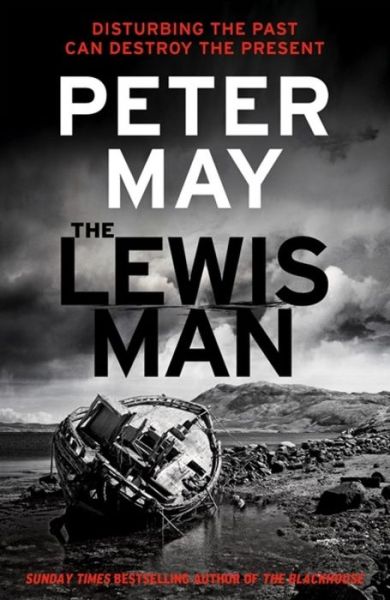
The Lewis Man By Peter May

The Lewis Man. Peter May
UK paperback 
(C) Quercus, 2012
Quercus; 2012; 435 pages


The second in the Lewis trilogy set in Scotland’s outer Hebrides, this is a gripping crime novel, well-written with believable characters.  

Like its predecessor, The Blackhouse, The Lewis Man follows an ex-policeman as he struggles to untangle a murder mystery. Along the way, he encounters many childhood acquaintances. At least that's the framework, but it's really about long-ago decisions touching multiple lives years later.  

There’s an agreeable air of melancholy, regret and damaged lives that works well with the grim Isle of Lewis setting. Being something of a rolling stone myself, I liked the idea of an isolated community where people are connected by family, friendship and past mistakes. And I was glad to find the same romantic tension between Fin MacLeod and childhood sweetheart Marsaili that made The Blackhouse so enjoyable. 


May's characters live and breathe. They have substance to them. Unlike Jack Reacher, ex-Detective Inspector  MacLeod doesn’t leave a trail of wrack and ruin everywhere he goes. He rarely finds it necessary to resort to violence. When his old friend punches him in a bar fight, he turns the other cheek, but not out of weakness. Author Peter May must be a man who has seen something of life and understands people.

To be honest, this effort doesn't quite equal the performance this author gave in The Blackhouse. The Lewis Man sometimes felt formulaic and over-written. The island is “storm-lashed;”  the wind “whips” twice in five pages; dialogue occasionally becomes a bit unnatural and encyclopedic, reminding me of the exposition in a Dan Brown novel. But these are minor objections. This book is much better written than I’ve come to expect from crime fiction, and well worth your time if you enjoy character-driven mysteries. 

N.B. I was so eager to get this book and its sequel, The Chessmen, that I paid a premium to order both (used) from England via Amazon.uk. That was in January; it seems both are more widely available in the U.S. now. 

Friday, June 14, 2013

The Tipperary Hoard

I have exciting news. It’s about… gold. That’s right, gold. I’m talking gold here. I’m hoping to discover a hoard of gold coins soon, like this lucky find in Ireland. This would ease my exit from corporate life. I’ll begin digging in the back yard tomorrow. 


Saturday, March 02, 2013

Hunter Thompson

This month's Playboy magazine (yes, I still subscribe) reprints a 1974 interview with Hunter Thompson, which concludes with the following statement:

"Nobody expected me to live past 20. Least of all me. I just assume, well, I got through today, but tomorrow might be different. This is a very weird and twisted world; you can't afford to get careless; don't fuck around. You want to keep your affairs in order at all times."

Sunday, February 24, 2013

The Les Riceys Hoard

A construction worker found these gold coins hidden in the attic of a building undergoing renovation in Les Riceys, France. They were probably there for about 80 years. Estimated value: about $1 million.


Coin World, Feb. 25, 2013 (click for link)


Sunday, January 06, 2013

A Horrid Dream


It was my first day in a new high school. I was searching for the place to pick up my class schedule. It seemed very important that I know my schedule, and get to that first class on time.
 
Nobody seemed to know where I could get my schedule. There was almost nobody in the school at all. I found myself in a hallway with aluminum wire racks against the wall. Someone gave me a packet and I opened it. But instead of my class schedule, the packet contained a set of gym clothes, including Jockey shorts in the school colors. On closer inspection, the Jockey shorts were much too small… so small that a newborn couldn’t have squeezed into them.
 
I kept plodding through the corridors, looking for someone who could tell me my schedule, beginning to suspect that it wasn’t the first day of school at all.

What does all this mean? Perhaps it symbolized a deep-seated yearning for order and structure in my life. But there was no structure. I was trying desperately to follow the rules. But there were no rules.

The Blackhouse By Peter May

368 pages
SilverOak, October 2012


I read a lot of fiction. But seldom does a book grab and hold me like The Blackhouse. Once the story got going, I literally couldn't put it down. On one memorable night I read straight through until midnight. Next day, I found some uninterrupted quiet time, shut myself in the guest room and finished it. Guys who live for reading learn to savor experiences like this.

I also did a couple of things I always do when a book really appeals to me: I started researching it on the Internet. And I wrote a blog post about it. This blog post, in fact. And I've even begun to toy with the idea of a trip to the Isle of Lewis in the Outer Hebrides, where this story is set.

This is a thriller and a murder mystery. There's a decent plot summary behind the link above, so I won't go into that here. As a mystery it's very well executed, but as the story unfolded that  became secondary to my enjoyment of The Blackhouse. This is more than just a crime novel. Far more appealing to me were the bleak island setting and great local color. In that sense it reminded me of Tawni O’Dell’s novel Back Roads [discussed elsewhere in this blog].

But without question, the best part of this book to this reader was the bittersweet subplot involving Detective Inspector Fin MacLeod and his old flame Marsaili MacDonald. Their pain and regret over teenage cruelties and roads not taken struck a deep chord within me. So did their disapppointing experience at the University of Glasgow, where Fin discovers he's not really interested in the arts, or in studying, or in Marsaili. This side of the story brought back sad feelings from my own youth. Surprisingly, nobody mentions those plot elements in any of the online discussions I've read. Perhaps I'm just a sentimentalist at heart.
I was very happy to learn that the sequel, The Lewis Man, features Fin. I hope it brings back Marsaili as well. For me, the romantic tension she brought to the book added a lot to this reading experience, although I wonder whether he can maintain it in the sequels. I'll know soon enough. I've just ordered The Lewis Man and The Chessmen from Amazon.co.uk (not available yet in any form in the U.S. as far as I can tell).

I've read Ian Rankin and Denise Mina.  I've long been interested in Scottish writers and settings. In part, that's due to my years in pipe bands and many memorable Scots I met as part of that effort. There's a well-known bagpipe tune called Stornaway. My first pipe band played it frequently, often with the better-known Skye Boat Song. Stornaway is in the area where much of The Blackhouse takes place. Small world.

Author's web site: http://maypeter.com/

Sunday, December 30, 2012

Books Read in 2012

Life would definitely be a lot less rewarding without reading (and writing). I read 22 books in 2012, less than in previous years. Perhaps that's because my quotient of non-fiction to total books was higher than in years past.

First, in no particular order, here are my favorites in the fiction category:

Mantel, Hilary: Wolf Hall
Excellent account of the life of Thomas Cromwell, minister to Henry VIII. It made me want to learn much more about the Tudors. The sequel, Bring Up The Bodies, is a must-read for 2013.
[Link: Wall Street Journal book review.]

Gregory, Phillippa: The Red Queen
Terrific historical novel about Margaret Beaufort, mother of Henry VII. I've resolved to read everything Gregory has written. An audiobook, I listened to it while driving to and from the EEI conference in Phoenix.
[Discussed elsewhere in this blog. ]

Dermont, Amber: The Starboard Sea
Rich boarding school kids live lives of decadence amidst the pain and confusion of adolescence.
[Link: New York Times book review.]  [Discussed elsewhere in this blog]

Among non-fiction, my favorite was Janet Reitman's Inside Scientology, an objective account of the bizarre "religion" and its founder, L. Ron Hubbard. Beware of Thetans and suppressive persons.
[Link: Janet Reitman's web site.]

And here are all the rest  (F = fiction, N = non-fiction):

Child, Lee: Killing Floor (F)
Ex-military policeman Jack Reacher dismantles a nest of criminals. Disappointing. I can’t picture Tom Cruise in this role.

Holman, Sheri: Witches on the Road Tonight (F)
Road trip takes a Depression-era couple to Appalachia, where they encounter a backwoods witch. Interesting and well-written.

Harkness, Deborah: A Discovery of Witches (F)    
Yes, another witch book. This book features vampires too, but the witches are much more interesting. Sorry, but I'm bored with tales of irresistibly seductive vampires and love-struck vulnerable women. No more, please, you're killing me. Well-written, but I won't bother with the sequel.

Hocking, Amanda: Switched (F)
I like to read a young adult novel every once in a while. The story had its moments. The author got this one noticed first as an e-book distributed via the Internet. That led to publication in conventional form. I give her a lot of credit for that, but this one's better suited to a teen female audience than guys like me.

Martin, George R.R.: A Clash of Kings (F)

A worthy sequel to A Game of Thrones.

Silva, Daniel: Moscow Rules (F)
I can barely remember what it was about. Something to do with an Israeli intelligence agent who is a deadly assassin and a gifted restorer of Old Masters. Give it a pass.

Collins, Suzanne:  The Hunger Games (F)
More than a young adult book, the author also has something to say about popular culture and celebrity. Much better than I expected.

Martin, George R.R.: A Storm of Swords (F)
Martin keeps the Game of Thrones wheeze moving along nicely in Book 3.

Martin, George R.R.: A Feast for Crows (F)
Book 4 of the Game of Thrones series. This one introduces a host of new characters while neglecting the most interesting from previous books. I could sense the author losing interest in his own story… or trying to prolong the series as long as he can for financial reasons… or all of the above. Too many promising plot elements are unresolved after four books. What happened to the Others and "winter is coming?" It's not coming fast enough.

Furst, Alan: Mission to Paris (F)
An actor is thrust into intrigue in pre-war Paris in this thriller. A better story than some of his prior books, perhaps because you don't have to wade through all those Balkan surnames.

Matheson, Richard: Steel (F)
Published as a tie-in to the Real Steel movie, this is a collection of Matheson's short stories, including some dating back to the 1950s. The tie-in: it includes Steel, on which the movie was  based and easily the best story of the lot. I picked it up in an airport bookstore.

Gwynne, S.C.: Empire of the Summer Moon (N)
Biography of the half-breed Quanah Parker, son of a Comanche chief and a captured pioneer woman. He chooses to live with the Indians, becoming a Comanche chief himself. Yet another bleak history of the exploitation of native Americans, it left me feeling weary and depressed.  

Rendell, Ruth: Portobello (F)
Not really a crime story, this one’s more a character study of contemporary Londoners. Great read. I’ll look for more by Baroness Rendell.

Fraser, George MacDonald: The Steel Bonnets (N) 
Remarkably detailed history of the Anglo-Scottish border reivers. By the author of the Flashman novels.
[Discussed elsewhere in this blog.]

Sansome C.J.: Dissolution (F)
In the days of Henry VIII, a hunchbacked lawyer is sent to dissolve a monastery and solve a murder mystery. Right after reading Wolf Hall, I was on a mad tear to find more Tudor material, and that led me to this one.

Guinn, Jeff: The Last Gunfight (N)
"The real story of the gunfight at the OK Corral." Wyatt Earp wasn't a very nice guy; he worked in brothels, probably as a bouncer, and spent time in jail. It seems his brother Virgil was probably a better lawman. Doc Holliday is variously referred to as "the hot-tempered dentist," "the tubercular dentist" (is the author joking?) and "a very dangerous man."

Perry, Ann: The Face of a Stranger (F)
Atmospheric detective story set in Victorian London. A William Monk mystery. Well-written, but the amnesia plot element didn't feel convincing to me.

Ackroyd, Peter: London Under (N)
Hidden secrets beneath the streets of London. I don't suppose I'll ever get this topic out of my system, and in truth, I don't want to.

In total, that's 17 fiction, 5 non-fiction. Not a bad year.

Looking ahead, I have some interesting items on the shelf for 2013. In addition to Mantel's Bring up the Bodies, there's Constantine's Sword by James Carroll (I'm in the early chapters now), The Book of Genesis: A Biography by Ronald Hendel, Iron Curtain by Anne Applebaum, and something or other by A.J. Cronin - perhaps Hatter's Castle.

Tuesday, November 20, 2012

The Red Queen by Philippa Gregory

Touchstone, 2011, 432 pages

I found this historical novel to be as well-written and entertaining as The Other Boleyn Girl and The Other Queen (both by the same author). It’s a darker story, but Gregory does a credible job of developing her central character, Margaret Beaufort, mother of Henry VII.  Margaret’s slow transition from innocent child bride to conniving, ruthless middle-aged woman seemed, to this reader, entirely believable. Gregory paints such a sympathetic portrait of her as a child that I didn’t mind what she became as life hardened her. It seems an understandable reaction to the constraints placed upon her by the times -- no freedom to choose and allowed to decide virtually nothing, despite being nobility and a rich heiress as well.

Historical fiction by its nature has to assign thoughts and feelings to real people whose true thoughts and feelings cannot be known. Some dislike that, but I love seeing famous figures made human. Richard III is depicted here as a good and capable man beset by conspiracy on all sides. Meanwhile Gregory has Margaret ordering the death of the princes in the tower. Interesting juxtaposition.

This author has been criticized for historical inaccuracies, but I personally don’t care about that. When I want facts, I’ll read history. I read fiction because I love being carried along by a good story with believable characters. This book fit my needs admirably on that score. I know I’ll read more of Philippa Gregory.

Wikipedia article on Margaret Beaufort

The St. Albans Hoard

Yet another ancient coin hoard has come to light. Last month, a patient guy with a metal detector discovered the largest hoard of Roman coins ever found in the United Kingdom. Gold, that is. Oro. Au.
Coin World, Nov. 12, 2012

According to this article, during the Roman occupation of Britain, coins were sometimes buried as a religious sacrifice to the gods. Some say objects were thrown into the Thames for the same reason. "The coins were scattered across a wide area... evidence suggests that the hoard was disturbed in the past few hundred years by quarrying activity or plowing."

Get the whole story:
Roman Ancients in Hoard Hidden About 1,600 Years
Coin World, Nov. 12, 2012

Saturday, October 13, 2012

It's an Outrage!!

The September 29 issue of The Economist contains an article with this headline: "The Faint Smell of Dog Fart". The story, which is about North Korean agrarian reform, informs us that the slogan “reform and opening up” sounds like the Korean word for “dog fart.”

This raises a number of issues.
What sort of a world are we living in when a respected publication like The Economist even prints the word "fart?" And in the headline, no less.

Furthermore, it is not accurate to describe dog farts as smelling "faint." Pungent, yes. Sharp, sour, noxious... but not faint.
I'm sorry, but this not responsible reporting. Excuse me, please, but I have to take a stand against this. We cannot afford to tolerate such gross breaches of the standards of journalistic excellence. Dog farts should be appropriately described. Or better yet, not described at all. At the very least, the managing editor of The Economist should have sent this article back for a headline re-write.

All of which has nothing to do with North Korean agrarian reform. But I don't care about North Korea, or agrarian reform in any context. As far as I am concerned, North Korea is not worth the powder to blow it to hell. I am, however, worried about the ever-declining moral decay we see all around us. This is an evil world, and daily groweth worse.

Get the full story: http://www.economist.com/node/21563772

Sunday, September 23, 2012

Sword at Sunset by Rosemary Sutcliff

512 pp; Chicago Review Press, 2008
ISBN-10: 1556527594

In this episode in Rosemary Sutcliff's fine Arthurian novel Sword at Sunset, Arthur is lost while walking in the mountains, and must spend the night in an isolated farmhouse. His hostess (here named Ygerna -- like Igraine, or is it Morgana?) sends the servants away and gives Arthur a drugged cup of wine. We then have the following memorable passage, told in the first person by Arthur, in which Ygerna says: "I knew that you would come, one day."
I frowned, and shook my head in a last attempt to clear it. "Are you a witch, then, to know the thing that has not yet come to happen?" And even as I spoke, another thought sprang to my mind. "A witch, or…"
Again she seemed to read my thinking; and she laughed up into my face. "A witch? Are you afraid to wake in the morning on the bare mountain side, and find three lifetimes gone by? Ah, but whatever happens tomorrow, surely tonight is sweet?"
With the speed and liquid grace of a cat, she slip-turned from her kneeling position, and next instant was lying across my thighs, her strange ravaged face turned up to mine and her dark hair flowing over us both. "Are you afraid to hear the music of the Silver Branch? Are you afraid to hear the singing of Rhiannon's Birds that makes men forget?"
I had not noticed the color of her eyes before. They were deeply blue, and veined like the petals of the blue cranesbill flower, the lids faintly stained with purple like the beginning of corruption. "I think you would not need the Birds of Rhiannon to make men forget," I said thickly, and bent towards her.
Never fear, it doesn't get any more explicit than that. But ruinous consequences ensue. The woman is Arthur's half-sister, although he doesn't know it at the time.

Here's an interview with author Rosemary Sutcliff, from the excellent Camelot Project at the University of Rochester. Sadly, she spent most of her life in a wheelchair, but by God, the woman could write.

William Marshall: Trial By Combat

The English knight William Marshall was regent of England under Henry III, as mentioned in  a previous post, The Brussels Hoard. In this true-life account taken from his biography, the young Marshall confronts his accusers.
"In the year 1180 William was in the summit of his career in the young king's court. Valued for his prowess in battle and his sagacity in counsel, he was favored by Prince Henry over all other members of his household. But his eminence aroused the anger of a number of his comrades-in-arms. They circulated the rumor that William was the lover of the young queen, Margaret of France…

"Naturally William wished to put an end to these rumors and clear his name as quickly as possible. His opportunity came in the autumn of 1182....Categorically denying the truth of the rumor that he was Queen Margaret's lover, he offered to prove his innocence in battle. On three successive days he would fight the three strongest of his accusers. If any one of them defeated him, his master could hang him as a traitor.

"When young Henry refused to accept this offer, William proposed that a finger should be cut off his right hand and that he should then be allowed to fight the strongest of his enemies. But Prince Henry had no intention of bringing the matter to trial. As soon as William realized that his master's purpose was to drive him from the court, he demanded a safe conduct to the frontier of the Angevin lands."  
 
From "William Marshall: Knight-Errant, Baron, and Regent of England" by Sidney Painter, Medieval Academy of America © copyright 1982

The Brussels Hoard

The Brussels Hoard of 1908
The Long Cross Coinage of Henry III
by Ron Churchill and Bob Thomas
Baldwin’s and the British Numismatic Society, 2012

Yet another example of hidden mysteries: as explained in this newly published book, workers tearing down an old tavern in Brussels uncovered something bricked up in a vault in the basement. The hoard they found there included 140,000 British coins. Indications are that they were last concealed in 1266 or 1267, so many must date to the reign of Henry III.

Oddly, Coin World states: "Most of the coins are worth only their silver value." Surprising, since they're over 700 years old.

The discovery was made in 1908. Apparently a portion of the coins were melted down for their silver content in the interim.  But these coins are going to become available to the public soon. It's inevitable: I'll buy one.

As an aside: Henry III's regent was William Marshall, who deserves a post of his own in this blog. That will follow soon.